
Black History Month: 8 Pioneers and Choreographers you need to know

Updated: Feb 23

In honor of Black History Month, we're celebrating some dance pioneers and choreographers who have broken barriers, revolutionized dance, and paved the way for choreographers and dancers of color today. These pioneers and choreographers have changed the dance scene by creating jobs, opportunities, and safe spaces for black and brown dancers to fulfill their artistry during times of socio-political struggle. Through the power of dance, they have made their voices heard and brought up these topics in conversation as well as inspired younger generations of black dancers and choreographers.
MODERN


ALVIN AILEY
Alvin Ailey is the founder of Alvin Ailey American Dance Theatre. He lived during the 1950's and 60's and brought modern dance to a global audience, highlighting the Black experience with elegance, style, and class.
Alvin Ailey was born on January 5, 1931, in Rogers, Texas where he grew up with his mother, working in cotton fields and witnessing the river baptisms at their local church—experiences that would later inspire some of his most memorable ballets.
In 1958, the Alvin Ailey American Dance Theatre was founded; dedicated to uplifting the African American experience while enriching and preserving the legacy of modern dance.
In 1960, Alvin Ailey created his masterpiece Revelations, which cemented his reputation as a choreographer of unique vision, with the ability to transcend racial barriers and connect deeply to people’s humanity.
Today, the Alvin Ailey American Dance Theatre is still standing strong, surpassing the life of its founder, and his teachings and methods are still studied and passed down through generations of dancer. Alvin Ailey dies of AIDS-related complications on December 1st, 1989, at the age of 58.
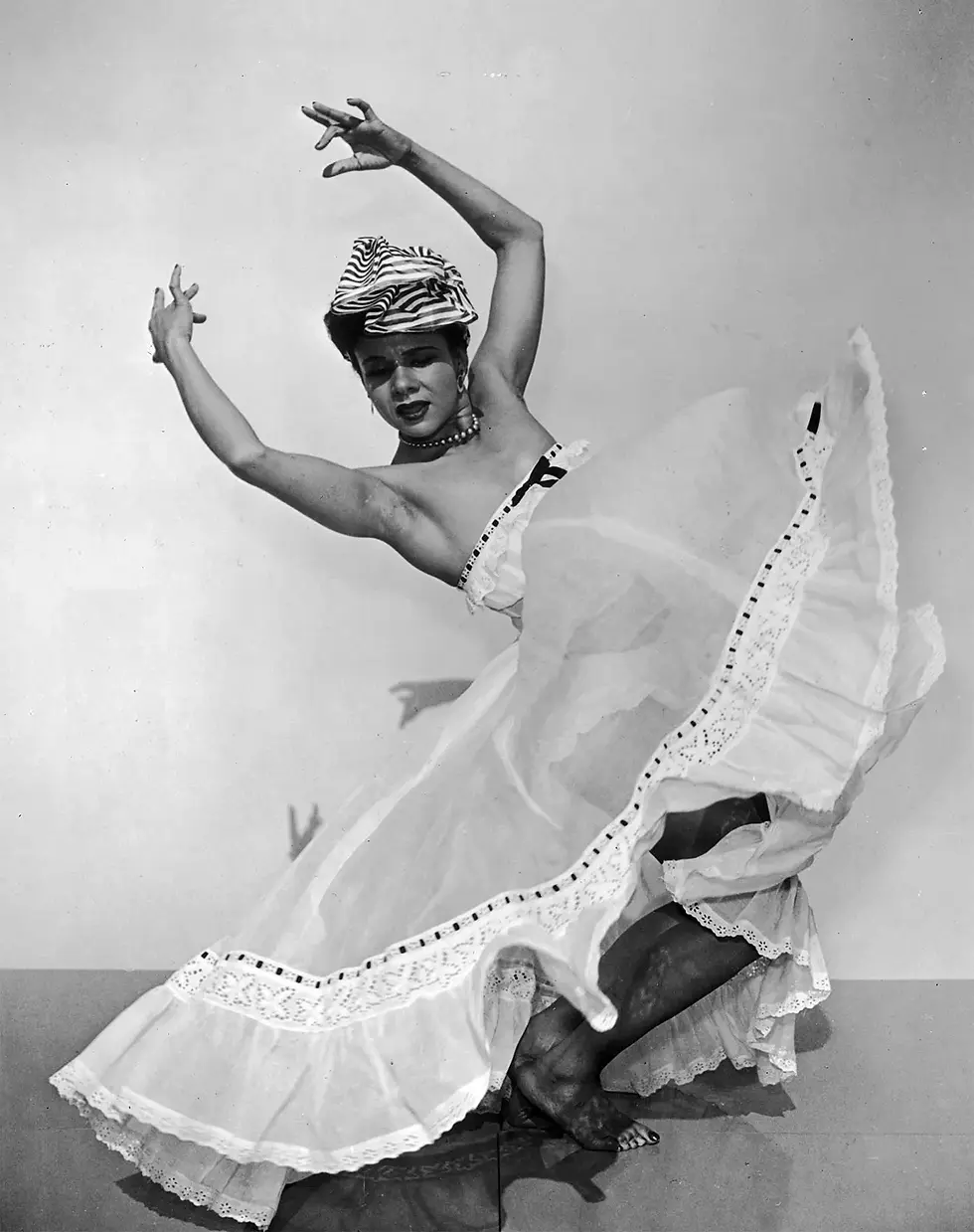


KATHERINE DUNHAM
Performer, anthropologist, choreographer, director, producer, author, essayist, educator, and humanist Katherine Dunham was born in Chicago on June 22nd, 1901.
Dunham received her bachelor's degree in Social Anthropology from the University of Chicago, which later would prove invaluable in her construction of a technique and dance theater based on primitive rhythms.
During her early career, Dunham founded the Ballet Nègre in Chicago in 1931 and the Negro Dance Group in 1937. She was director of the Writers Project and subsequently Dance Director for the WPA Federal Theatre Project in Chicago.
Dunham is credited with introducing international audiences to African aesthetics and establishing African dance as a true art form. Called the “Matriarch of Black Dance,” her groundbreaking repertoire combined innovative interpretations of Caribbean dances, traditional ballet, African rituals and African American rhythms to create the Dunham Technique, which she performed with her dance troupe in venues around the world.
For many years, Dunham divided her time between the Habitation Leclerc in Haiti and East St. Louis, IL, where she established the Performing Arts Training Center, where she introduced a program designed to channel the energy of the community’s youth away from gangs and into dance. Dunham was always a formidable advocate for racial equality, boycotting segregated venues in the United States and using her performances to highlight discrimination. She made national headlines by staging a hunger strike to protest the U.S. government’s repatriation policy for Haitian immigrants.
Dunham passed away on Sunday, May 21, 2006 at the age of 96.
BALLET


MISTY COPELAND
Born in Kansas City, Missouri and raised in San Pedro, California, Misty Copeland began her ballet studies at the late age of thirteen. Two years later, she won first place in the Music Center Spotlight Awards.
Misty joined ABT’s Studio Company in September 2000, joined American Ballet Theatre as a member of the corps de ballet in April 2001, and in August 2007 became the company’s second African American female Soloist and the first in two decades. In June 2015, Misty was promoted to principal dancer, making her the first African American woman to ever be promoted to the position in the company’s 75-year history.
Copeland became a strong advocate for diversifying the field of ballet and creating access for dancers of varying racial and economic backgrounds. She served on the advisory committee for the ABT’s Project Plié, a program (started in 2013) offering training and mentorship to dance teachers in racially diverse communities around the country as well as in Boys & Girls Clubs.
Throughout her career, Copeland transcended the traditional limits of ballet by making the dance a more inclusive place for all kinds of performers and audiences.
One of Copeland’s most impactful performances to date was her final on-stage appearance as she said farewell to ballet on Oct. 22, 2025. She returned to the stage after a five-year break and started her performance as Juliet, from Romeo and Juliet. She then closed out her performance by dancing the Sinatra Suite by Twyla Tharp. Her emotional goodbye to ballet was closed with a long standing ovation, a fitting emotional ending to Copeland’s career.


DESMOND RICHARDSON
Co-Founder and Co-Artistic Director of Complexions Contemporary Ballet, born on December 15, 1968, in Sumter, South Carolina.
Richardson is a Presidential Scholar in the Arts and was the first African American Principal dancer of American Ballet Theater, a principal dancer with The Alvin Ailey American Dance Theater, Frankfurt Ballet and a featured guest performer nationally and internationally.
He co-founded COMPLEXIONS Contemporary Ballet which was established with a core mission of diversity, equity, and inclusion, specifically creating professional opportunities for exceptional Black dancers and other artists of color.
The company actively challenges traditional ballet demographics, hiring a diverse range of dancers who blur lines of race, technique, and body type.


DWIGHT RHODEN
Co-Founder and Co-Artistic Director of Complexions Contemporary Ballet, born on April 4th, 1962 in Dayton, Ohio.
Dwight has established a remarkably wide-ranging career, earning distinction from The New York Times as “one of the most sought out choreographers of the day”.
He co-founded COMPLEXIONS Contemporary Ballet which was established with a core mission of diversity, equity, and inclusion, specifically creating professional opportunities for exceptional Black dancers and other artists of color.
In three decades, he has created over 100 ballets for COMPLEXIONS, as well as for numerous other companies, including the Alvin Ailey American Dance Theater, Arizona Ballet, Aspen Santa Fe Ballet, BalletMet, Dance Theatre of Harlem, Joffrey Ballet, Miami City Ballet, New York City Ballet, Pennsylvania Ballet, PHILADANCO!, Mariinsky Ballet, Zenon Dance Company, The Washington Ballet, The Houston Ballet and The San Francisco Ballet, among many others.
HIP-HOP / COMMERCIAL


CHARM LA'DONNA
Born Charmaine Jordan on May 14, 1988, Charm La'Donna is a renowned Compton-born choreographer, dancer, and creative director known for her work with artists like Kendrick Lamar, Dua Lipa, and The Weeknd.
Charm La'Donna is a pioneering, award-winning choreographer and creative director known for defining modern commercial dance through high-energy, narrative-driven hip-hop and pop routines for artists like Kendrick Lamar, Dua Lipa, and Beyoncé.
La'Donna was the sole dancer for Kendrick Lamar’s 2018 tour and choreographed for the 2021, 2025, and 2026 Super Bowls.
She won a 2019 VMA for Best Choreography for Rosalía and J Balvin's "Con Altura" and received Emmy nominations for her work with Beyoncé and Lamar.
Beyond her creative work, she is dedicated to uplifting the next generation of dancers through mentorship, workshops, and fostering a supportive environment for Black women in the industry.

SEAN BANKHEAD
Born in Philadelphia and raised in Atlanta, Sean Bankhead grew up in the vibrant dance culture of the South. With influences ranging from classic hip-hop to contemporary and street dance, Bankhead honed a distinctive style that blends precision, athleticism, and raw emotion. His passion for movement quickly evolved into a career that would change the landscape of music videos, live performances, and entertainment as a whole.
Sean has choreographed for multiple music videos for celebrities including: Lil Nas X, Normani, Cardi B, Sam Smith, FKA Twigs, and Tate McRae, to name a few.
Sean uses Black culture's influence, symbolism, and aesthetics in his work and often choreographs for dancers and artists of color, bringing these ideas onto mainstream media.
EXPERIMENTAL


KYLE ABRAHAM
Kyle Abraham, born on August 14th, 1977 in Pittsburgh, Pennsylvania, is a celebrated American contemporary dancer, choreographer, founder and artistic director of A.I.M (Abraham In Motion), known for blending hip-hop, street, and modern dance styles.
Kyle Abraham's work often brings attention to socio-political issues such as police brutality against black communities, gang violence, and gender identity and conformity amongst many others.
Apart from founding and directing his own company, A.I.M, Kyle Abraham has also set work on companies and dancers previously mentioned, such as: The Alvin Ailey Amercian Dance Theatre, New York City Ballet, and Misty Copeland to name a few.
Kyle Abraham also brought the hip hop culture and aesthetic into studio spaces by using it as his main influence for choreography and blending it with modern and contemporary movement, which is what we saw more of in higher academia, at the time Hip Hop was considered "street" dancing and was looked down upon by dance scholars.
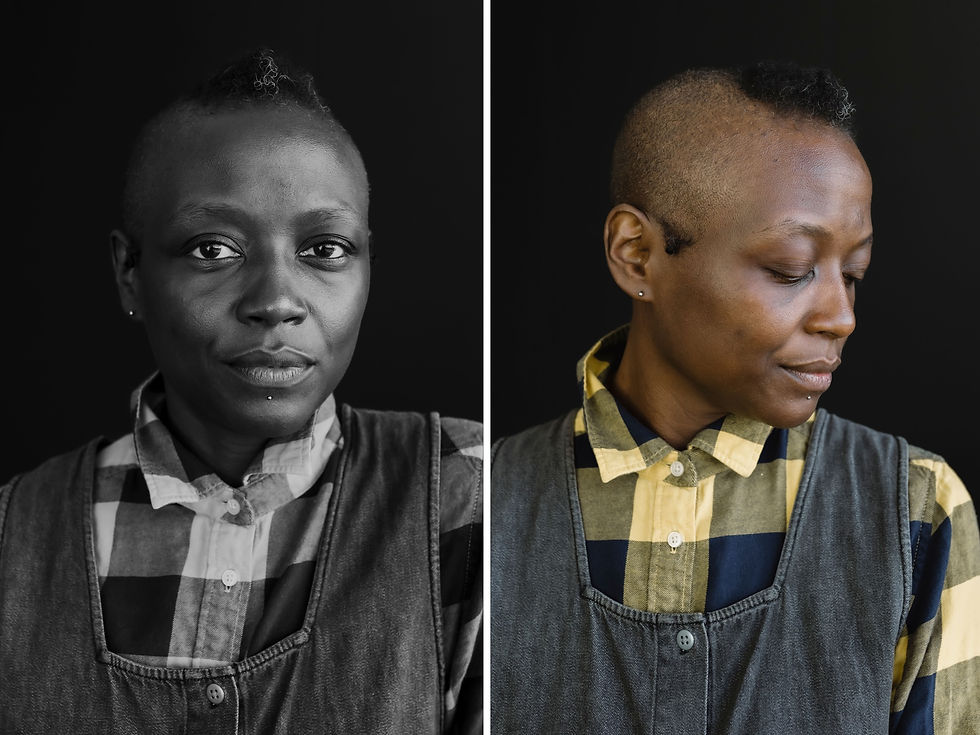


taisha paggett
Born and raised in Fresno, CA, taisha paggett is an interdisciplinary dance artist whose individual and collaborative works re-articulate and collide specific western choreographic practices with the politics of daily life so to contemplate and interrupt fixed histories of Black and queer embodiment, desire, placemaking, possibility and survival.
taisha's works draw upon inquiries inside of social practice; critical pedagogy; somatic and contemplative investigation; queer, feminist and Black studies; performance and visual art studies; as well as the political and philosophical meshes of personal history.
They investigate the "phenomenology of race and gender" by challenging traditional narratives and focusing on the politics of daily life. taisha uses somatic, and pedagogical approaches to examine how bodies exist within specific, often restrictive, environments.
taisha's work goes above and beyond the human body and visual aesthetics. They use dance as an addition to film, music/sound, and mixed media art which has allowed for their work to be displayed in multiple museums, moving dance out of the theatre and into completely new and innovative spaces.
Written by: Emmanuel Hernandez
Edited by: Sarah Medley
Follow us!


Comments